


There are adventures that cannot be foreseen.
True Adventures—with a capital A.
To prawdziwe przygody przez duże P.
When, at the beginning of the present millennium, Marianna Kowalska from Przystałowice Małe agreed to sing mazurkas accompanied by Jan Gaca’s violin, she set one condition: “First I will sing three devotional songs, and you will record them.” “Not an excessive price,” I thought… I listened to her singing with amazement and delight, but even had I ventured into the wildest territories of my imagination, I could not have predicted that I was taking part in the beginning of a new, incalculable journey into the unknown…
Ten years after meeting Marianna Kowalska, the bag of religious song recordings that my friends and I had collected—from Roztocze to Podlasie—was bursting at the seams. We founded a small amateur confraternity (still active today) to make use of this “bag,” singing prayer-songs once a week according to the liturgical year. After two years of regular practice, we had mastered the repertoire sufficiently to focus on the true sense and meaning of the songs. And then it appeared—the “virus of rhythms.” I do not know whether I was patient zero or one of my colleagues, but as a result of this “infection,” I began hearing rhythms and dance phrases in well-known devotional songs. I could neither pray nor sing properly—my mind was absorbed entirely by the analysis of meters and measures that seemed to resonate within the flowing, rubato singing. At the time, we knew little about contrafactum, nor that the practice of fitting religious texts to popular dance melodies dates back to the Renaissance. Thus, with each rhythmic discovery, we felt ever stronger gusts of the winds of adventure—the same winds that once filled Columbus’s sails…
There was no way out—we had to play the songs. Music resounded, and after several years
of evolution, in December 2025 it took the form you hear on this album. At times there is
nostalgia; at times Swedish dances; at times a raw mazurka dance phrase; and sometimes a
fondness for Californian punk rock (the domain of myself and Marek Szwajkowski). It is the
result of the deeply rooted experiences of the ensemble’s members.
After years spent with chant (Wolfgang Niklaus and Serhij Petryczenko) or club jazz (Jacek
Muża), years devoted to studying mazurkas with Radom-region musicians, led by Jan Gaca,
and learning songs from the finest singers of the Polish lowlands (the rest of the ensemble),
we feel deeply grounded—even at home—within these priceless cultural patterns.
Therefore, we dare to respond creatively to their call, which might be expressed in the
following words:
“…[W]ell then, sons and daughters, how will you play and sing the eternal music today so as
to preserve its spirit and place it in contact with the world?”
Yet no matter how wild our response may seem, and how far beyond the frames sanctified by tradition the sounds of our instruments may venture, these songs remain for us songs of prayer—just as the singers who gifted them to us would have wished.
Maciek Żurek
This album is, above all, the fruit of more than a quarter-century of encounters with people who welcomed us and generously shared their memory, knowledge, mastery, and sensitivity. During our journeys—undertaken thanks to traditional music—we met extraordinary personalities to whom we owe more than customary words of gratitude can express, and more than the pages of this booklet can contain. Therefore, we simply list their names here as testimony to our debt.
Marcin Abijski, Nando Acquaviva, Lykourgos Angelopoulos (d. 2014), Jan Bernad, Marcin Bornus-Szczyciński, Ghjuvanni Casabianca, Krystyna Ciesielska (d. 2021), Katarzyna Dancewicz, Francisco Manuel Diaz, Julia Doszna, Maria Dudzik, Janina Dyjach, Stanisław Fijałkowski (d. 2012), Jan Gaca (d. 2013), Krystyna Gaca, Maria Gaca (d. 2023), Stefan Gaca (d. 2024), Stanisław Głaz, Bogusława Grzywa, Wincenty Gryszan, Marianna Hałas, Jozef Hiero, Roman Jenenko (d. 2006), Tadeusz Jedynak (d. 2020), Jan Kacica (d. —), Maciej Kaziński (d. 2018), Barbara Kietlińska, Iwan Kikinczuk (d. 1995), Jan Kmita, Jan Komosa, Stanisław Komosa (d. 2016), Jadwiga Konopko, Jan Konopko, Marianna Kowalska (d. 2020), Irena Krawiec, Witold Kuczyński, Zofia Kucharczyk (d. 2022), Roman Kumłyk, Stanisław Lewandowski (d. 2023), Bronisław Liwak, Helena Majstrowicz (d. 2018), Mikołaj Mazurek, Teresa Mirga, Walenty Mirecki (d. 2010), Andrzej Murawski, Józef Murawski, Jozef Murawski (d. 1990), Marianna Oracz, Janina Oleszek, Maria Pęzik (d. 2022), Marcel Peres, Giovanni Pintus, Robert Pożarski (d. 2021), Franciszek Racis (d. 2018), Charalambos Rimbas, Waldemar Sajkowski, Czesław Siemionkowicz, Jozefa Siwiec (d. 2024), Maria Siwiec, Piotr Skorupa, Jan Szklarzewski, Jan Szymczyk (d. 1993), Stanisław Świsłocki (d. 2018), Mychajło Tafijczuk (d. 2025), Władysław Tkaczuk (d. 1995), Jan Wnuk (d. 2025), Anna Wojtyniak (d. 2016), Teodor and Helena Wrobel, Bolesław Zyśk (d. 2011), Stefania Żuraw.
We are also aware that this wind of adventure had filled the sails of many explorers
before
us. We bow before the achievements of priests Michał Marcin Mioduszewski and Szczepan
Keller, as well as Oskar Kolberg, Stanisław Vincenz, and similar heroes.
We extend our deep respect to contemporary documentarians, musicians, and singers who
have devoted their lives to traditional music…
The funeral song, though its very idea has existed in Polish culture since pre-Christian times, is relatively young in the form known to us today. The spread of Catholic hymns is linked to the Jesuit Counter-Reformation and the simultaneous disappearance—suppressed by the Church—of lamentations and songs of folk origin. Protestants were the first to create hymnals in national languages, and the flourishing of Catholic religious song in the 17th century was part of the struggle against the Reformation.
Thus, the mourning repertoire of our ancestors was founded in the Baroque era. For this reason, the funeral song—whose formula we play with in the title Dances—remains in Polish culture as a captive of that period’s poetics. Later creators archaised their works to lend them gravity and to align with the general conservatism of funeral rites. Today, it is difficult to distinguish what is truly the oldest layer and what is a nineteenth-century imitation.
What distinguishes earlier funeral songs from their more modern incarnations is the explicit expression of fear…Skończyła mi się drogaRadical, even “turpistic,” imagery; the ever-circulating phrase from Ecclesiastes, vanitas vanitatum et omnia vanitas;the awareness of the vanity of worldly life; and finally the call memento mori mori—remember that you will not escape death—form the foundations of this poetics.
Many of the oldest songs lack direct references to God, placing death itself at the center—as a merciless force carrying everything away. The motif of danse macabreshared by all, regardless of status, is particularly striking in the piece that opens the album: Let Monarchs Build Their Cities..
The songs presented on the album are a diverse collection of themes, genealogies, and genres. They include truly Baroque pieces like "Let the Monarchs Build Their Cities"; "They Fly Years"; "I Farewell to You, My Joyful World," and folk paraphrases of them. "Now Death Proves Us Here." Songs with an apostrophe to the Lord Jesus also find their place in this repertoire: "O Jesus of Nazareth," with a Passion motif, and the supplication "I Am Your Whole Heart," as well as "My Road Has Ended," a poem likely of Baroque origin, but unlike "The Monarchs," written with a directly religious intent.
Thus, the mourning repertoire of our ancestors was founded in the Baroque era. For this reason, the funeral song—whose formula we play with in the title All Souls’ Dances—remains in Polish culture as a captive of that period’s poetics. Later creators archaized their works to lend them gravity and to align with the general conservatism of funeral rites. Today, it is difficult to distinguish what is truly the oldest layer and what is a nineteenth-century imitation.
Witek Wojciechowski
The theme of this album is one that's hard to ignore—the verdict has been passed, life is over, and there will be no appeal. This truth must be accepted and embraced. This applies to the living, but also to the dead. For as the words of one of the desolate songs proclaim: "The soul came out, came out of the body / in a green meadow it stood / stood, stood and cried / where will I spend the night?" And in this dilemma—as funeral singers believe—"The song shows the way to Heaven."
Funeral songs have for centuries supported the living in times of mourning. They have helped express sorrow and give meaning to farewell. Previously, they formed an essential element of ritual, uniting the community in shared experience of loss. Their words and melodies soothed pain while emphasising remembrance, creating space for reflection on life and transience.
Today, however, death is increasingly being pushed out of daily life and treated as an uncomfortable topic. Farewell rituals are becoming shorter and more formal, devoid of the former gestures of communal care. Families often lack the time or space to consciously accompany the dying. The process of passing away becomes lonely, and the memory of the deceased loses its depth.
In this context, this album is an attempt—not the first in Poland—to remind us not so much of inevitable death as of the healing role of communal endurance in the face of the ultimate, of rituals developed over centuries, and of the now-forgotten art of the “good death.”
The musicians take us into a very ancient sound world, dating back to the 16th and 17th centuries. It was then that funeral songs began to replace ancient Slavic laments, composed by bachelors conscious of Catholic doctrine and approved by the bishop's imprimatur (permission to print). Musically, these songs also formed a kind of canon. The vast majority of them were written in the Aeolian mode to emphasize their sorrowful meaning. However, the despair-soothing Ionic mode (O Jesus Nazarene) or the Dorian mode, emphasizing the high, likely knightly, position of the deceased, serving as an example of equal treatment for all in death (Otóż nami tu świat wojegoty). There is also an archaic pentatonic scale (I have run out of road), which may even date back to the Middle Ages, and on the other hand, there is also a much younger minor mode (I bid you farewell, my cheerful world), which became very popular in folk music from the end of the 18th century.
There are few songs here that represent a purely psalmodic rhythm. Most of the songs selected by the musicians utilize three-dimensional dance rhythms (trocheje, trybrachy, anapests, or ionics), found in dances popular in the 16th and 17th centuries, such as the galliard and courant. Sung slowly, they no longer have their original lively character, but their danceability is still palpable. There are also other formulas with a clearly dance-like character, often ending with a short-long iambic cadence characteristic of Polish dances. It was from this rhythm that various rhythms like the ionicus a minore, which we today call mazurka or polonaise rhythms, developed in the 17th century. This album features only a few examples. These songs were written before mazurkas and polonaises were danced, but before them, Polish choczone and gonione. Some songs also reveal a clash of different rhythms, best exemplified by the song O Jesus Nazareński. However, the entire repertoire takes on a character very familiar to us today due to the performers' use of tempo rubato.
The artists, however, don't stop at simply revisiting the repertoire. Thus, in addition to violins and bass instruments, they also feature instruments that were not present in the Baroque era. Some, such as the harmonium, have a religious ethos. Other instruments, such as the tuba, serve a dual purpose—they can allude to the text of a funeral mass (Tuba mirum spargens sonum) or emphasize the rhythmic nature of dance, offsetting the mournful mood. This isn't a simple reconstruction, but rather an attempt to incorporate them into the contemporary soundscape, to which the composers wish to restore these songs.
Tomasz Nowak
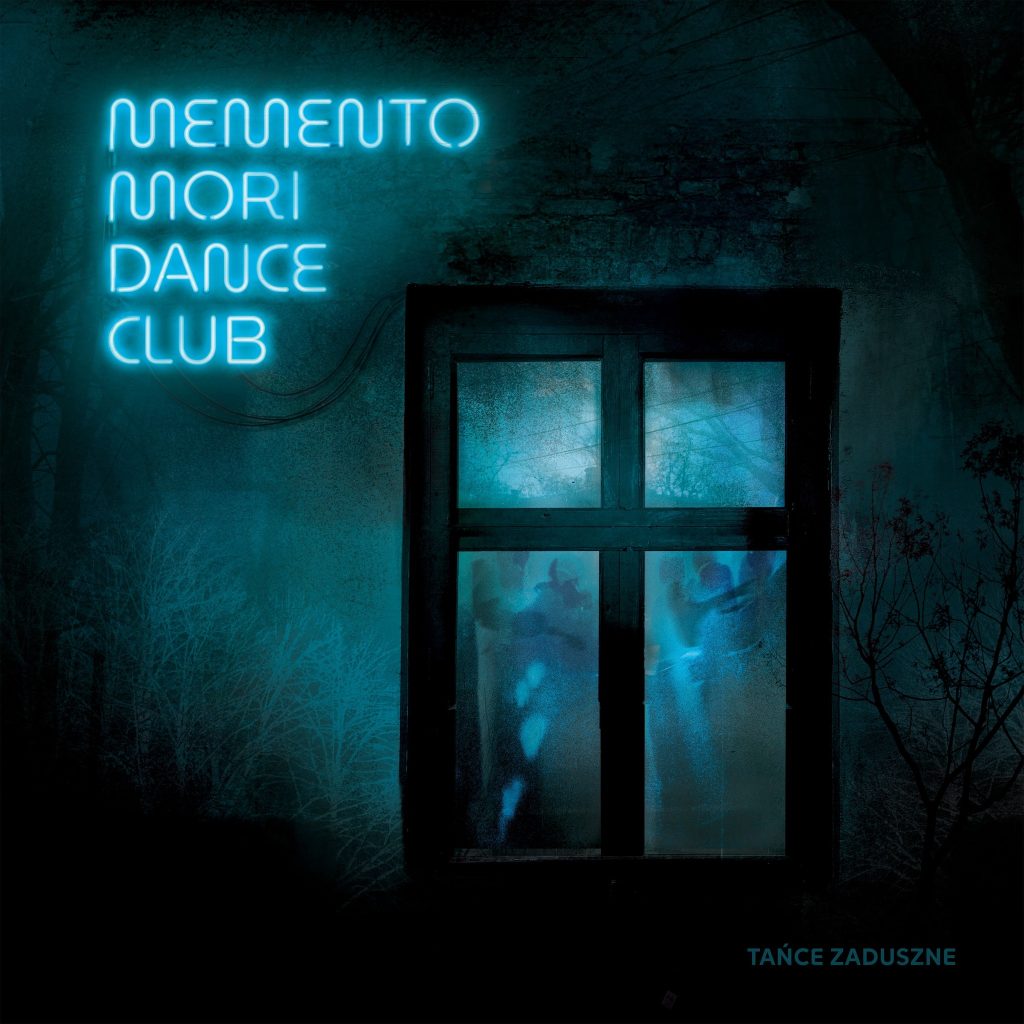
From December 8–10, 2025, thanks to the favorable decisions of the Polish Radio Folk Culture Center, we met at Studio S4 to record the material for our first album, All Souls’ Dances. The recordings were made by a team from Polish Radio, under the distinguished leadership of Ewa Guziołek-Tubelewicz and Jacek Gładkowski. Mixing and mastering were entrusted to Michał Garstecki. The graphic design was created by Marta Gotfryd. The album was released by the Memo Foundation, headed by Maciej Kudłacik. Much of the funding for the production came from a public crowdfunding campaign, and we are honored that so many people placed their trust in us and supported our work. For us, this adventure has been an honor, a privilege, and a joy. We extend our thanks to everyone we have met along the way.